System-Level Intelligence for the Next Generation of EV Charging
The growing complexity of EV charging infrastructure
As electric vehicles scale from early adoption to mass-market reality, EV charging infrastructure is evolving into a highly complex, interconnected system. What was once a collection of independent charging stations is now a dynamic network influenced by traffic patterns, user behavior, grid constraints, electricity prices, and peak-hour demand.
For operators, infrastructure owners, and investors, this complexity creates a new challenge: how to scale efficiently while maintaining profitability, service quality, and grid stability. Managing stations individually is no longer enough. The real value lies in understanding and optimizing the entire system.
This is where Volterra’s Digital Twin technology comes in.
Managing individual stations is no longer enough
Traditional charging management tools focus on station-level metrics: uptime, utilization, or energy consumption at a single location. While necessary, these views are incomplete.
In reality, EV charging performance is shaped by interactions across the network:
- Demand shifts from one district to another throughout the day
- Congestion at one station impacts nearby locations
- Electricity prices and grid limits change by time and place
- User decisions respond to price, waiting time, and convenience
Without system-level intelligence, operators risk underutilized assets in some locations, congestion in others, higher energy costs, and suboptimal returns on investment.
Volterra’s Digital Twin is designed to address this gap.
What “Digital Twin” means in Volterra’s platform
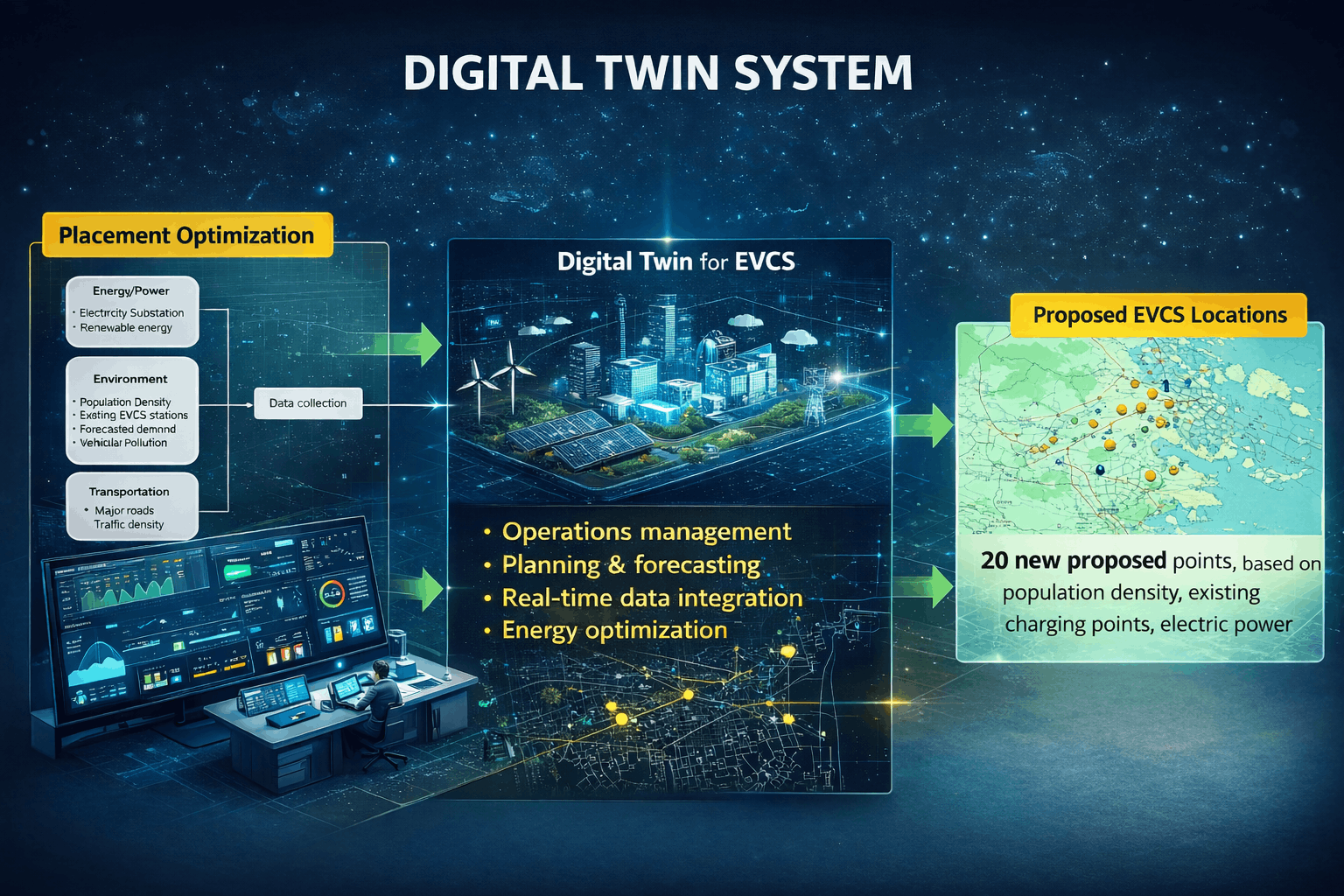
At its core, Volterra’s Digital Twin is a living, system-level representation of the entire EV charging network.
Instead of looking at stations in isolation, the Digital Twin continuously simulates how the whole infrastructure behaves across locations, time periods, and demand scenarios. It reflects how vehicles move, where charging demand emerges, how congestion forms, and how pricing and operational decisions ripple across the network.
In practical terms, this allows operators to:
- Simulate the entire EV charging infrastructure as one system
- Forecast charging demand by location and time
- Anticipate congestion, charging surges, and idle capacity before they happen
- Test operational and pricing strategies in a virtual environment before executing them in the real world
The result is clarity. Decisions are no longer reactive. They are informed, proactive, and system-aware.
How AI-driven forecasting, pricing, and scheduling change operations
The Digital Twin becomes most powerful when combined with Volterra’s AI-driven operational intelligence.
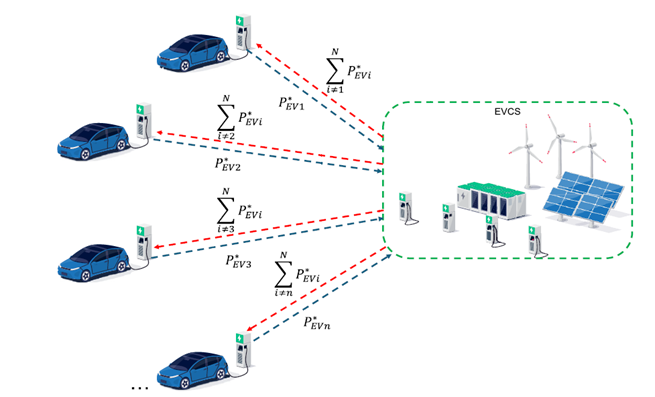
Using demand forecasting, the platform predicts when and where charging pressure will rise. When congestion is expected, the system can proactively respond by:
- Moderating vehicle distribution across nearby stations
- Dynamically adjusting prices to balance load and demand
- Scheduling charging and power usage more intelligently under grid constraints
Rather than treating pricing as a static or manual lever, Volterra enables dynamic pricing as an operational tool, encouraging users to shift charging behavior without compromising experience.
AI-based scheduling and price-bidding mechanisms further allow operators to align charging operations with grid conditions, peak-hour constraints, and energy cost signals, creating a more resilient and cost-efficient system.
Tangible value for operators and investors
For charging operators and infrastructure investors, the business impact is measurable and compounding.
By operating the network as a coordinated system, Volterra’s Digital Twin helps deliver:
- Higher utilization across the entire station network, not just at flagship locations
- Smarter load redistribution between stations, reducing congestion and idle capacity
- Increased revenue per kWh through optimized pricing and higher throughput
- Improved IRR by lowering electricity costs and maximizing asset efficiency
Crucially, these gains do not come at the expense of user satisfaction. Instead, they are achieved by aligning economic incentives with better operational flow.
The Digital Twin becomes a strategic decision-support layer, helping teams prioritize expansion, pricing strategies, and operational policies with confidence.
Tangible value for EV users
While the technology operates at a system level, the benefits are clearly felt by EV drivers.
From the user’s perspective, Volterra-enabled networks offer:
- Reduced waiting time at charging stations
- Better visibility into where and when to charge
- Demand forecasting and peak-hour guidance that directs users to the right station at the right time
- Lower total charging costs through peak avoidance and smarter pricing
The experience becomes more predictable, transparent, and convenient, key factors in accelerating EV adoption and building long-term trust in charging networks.
An open ecosystem and what comes next
Volterra’s vision extends beyond individual operators.
With Open APIs at its core, the Digital Twin enables seamless integration with:
- Taxi fleets and ride-hailing platforms
- Commercial fleet operators
- Mobility apps and third-party services
These ecosystem players can query real-time data on pricing, availability, waiting time, and incentives, allowing the entire mobility ecosystem to coordinate around shared intelligence.
In this model, Volterra acts as a system-level intelligence layer for the EV charging ecosystem, connecting infrastructure, operators, fleets, and users into a more efficient, scalable whole.
Start the conversation
Every charging network is different. Grid conditions, user behavior, and business objectives vary by market and operator.
Volterra’s Digital Twin is not a one-size-fits-all solution. It is a strategic capability designed to adapt to your network, your goals, and your growth plans.
If you are exploring how system-level intelligence can improve utilization, profitability, and user experience across your charging infrastructure, we invite you to start a conversation with the Volterra team and explore what’s possible.