Transforming the future of electric vehicle charging through intelligent energy management and sustainable technology
As Vietnam accelerates toward a sustainable transportation future, one critical challenge stands in the way: how do we build an electric vehicle (EV) charging infrastructure that’s both profitable for operators and affordable for users, while maximizing the use of clean renewable energy?
The answer lies in VOLTERRA, a groundbreaking smart charging system developed by VinUni’s Center for Environmental in Intelligence (CEI) in collaboration with global experts. This next-generation platform is designed specifically to address the unique challenges facing Vietnam and Southeast Asia’s growing EV market.
The Challenge: Beyond Simple Plug-and-Charge
Traditional EV charging stations operate much like gas stations, they simply dispense energy on demand, typically drawing power directly from the electrical grid. While this approach works, it comes with significant drawbacks:
- High operational costs due to reliance on grid electricity during peak hours
- Limited integration with renewable energy sources like solar and wind
- Grid stress as more EVs come online, potentially overloading urban power systems
- Missed opportunities for cost savings and environmental benefits
In Vietnam’s context, where urbanization is rapidly increasing and the government is committed to green transportation goals, these limitations become even more pronounced.
Introducing VOLTERRA: Smart Energy Management for the Future
VOLTERRA takes a radically different approach. Instead of simply connecting EVs to the grid, it creates an intelligent microgrid that seamlessly integrates multiple energy sources:
Renewable Energy Integration
- Solar panels (PV arrays) that harness Vietnam’s abundant sunlight
- Small wind turbines that capture wind energy, even in urban environments
- Smart monitoring systems that optimize energy capture throughout the day
Advanced Energy Storage
- Battery Energy Storage Systems (BESS) that store excess renewable energy for later use
- Degradation-aware management that extends battery life by avoiding over-utilization
- Peak shaving capabilities that reduce energy costs by using stored power during expensive peak hours

Intelligent EV Charging
- Multiple charging levels from standard Level 2 to high-speed DC fast charging
- Bi-directional charging (V2G) that allows EVs to feed energy back to the grid when needed
- Smart scheduling that optimizes when each vehicle charges based on energy availability and cost

The Game-Changing Innovation: Hybrid Game Theory Optimization
At the heart of VOLTERRA lies a sophisticated optimization system that uses game theory (a mathematical framework typically used in economics) to balance the competing interests of different stakeholders.
How It Works:
Layer 1 – The Pricing Game (Stackelberg Game): The charging station operator acts as a “leader”, setting electricity prices based on real-time energy costs, renewable availability, and demand forecasts. EV users respond as “followers”, choosing their optimal charging times to minimize their costs.
Layer 2 – The Resource Game (Non-Cooperative Game): When multiple EV users compete for limited charging resources, the system fairly allocates power while ensuring efficiency. Think of it as an intelligent traffic management system for electricity.
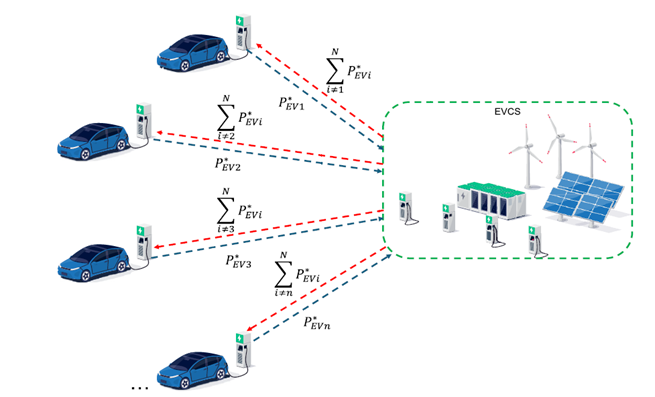
This dual-layer approach ensures that:
- Operators maximize profits through intelligent pricing and energy management
- Users minimize costs by accessing the most affordable charging times
- The system overall operates at peak efficiency
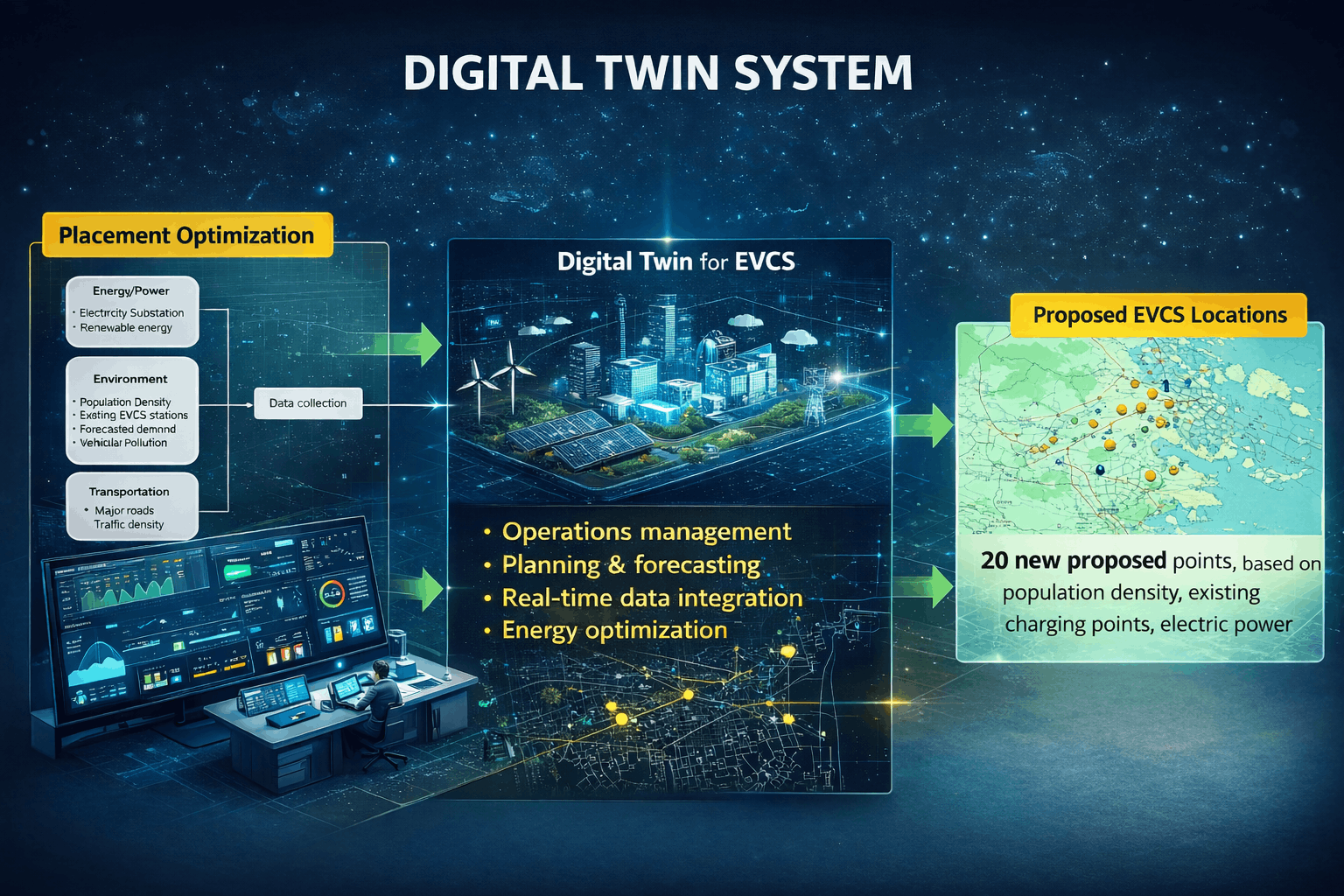
Digital Twin: Testing Before Investing
One of VOLTERRA’s most innovative features is its digital twin platform, a virtual replica of the physical charging system that allows operators to:
- Simulate different scenarios like typhoon season disruptions or varying energy prices
- Test new strategies before implementing them in the real world
- Train staff and stakeholders using realistic simulations
- Optimize operations through continuous virtual experimentation
This capability is particularly valuable in Southeast Asia’s diverse climate conditions, where weather patterns can significantly impact renewable energy generation.
Real-World Impact: The Numbers Speak
Preliminary testing reveals VOLTERRA’s dramatic impact on charging station profitability. The system achieves over 800% improvement in operator profits compared to conventional charging methods, reaching 7,260 cents versus just 829 cents for traditional systems.
Beyond financial benefits, VOLTERRA delivers:
- Up to 85% reduction in greenhouse gas emissions when powered by renewable energy
- Enhanced grid stability through intelligent load management
- Reduced infrastructure costs by avoiding expensive grid upgrades
- Improved user experience through predictable, affordable charging
Built for Vietnam, Designed for Asia
VOLTERRA addresses specific challenges facing Vietnam and the broader ASEAN region:
Tropical Climate Considerations
The system accounts for how heat and humidity in countries like Vietnam, Indonesia, and the Philippines can accelerate battery degradation, incorporating this into its optimization algorithms.
Grid Limitations
Many Asian cities have legacy electrical infrastructure that wasn’t designed for massive EV adoption. VOLTERRA helps manage this transition by reducing peak demand and providing grid support services.
Economic Development
By making EV charging infrastructure more profitable, VOLTERRA encourages private sector investment in sustainable transportation, crucial for countries where government resources are limited.
Regulatory Compliance
The system respects local grid export limits (such as Vietnam’s 20% rule) while still maximizing renewable energy usage.
From Nha Trang to the Region: A Scalable Blueprint
VOLTERRA is set to pilot in Nha Trang, a city identified as a green transformation hub. This deployment will serve as a proving ground for the technology and a model for expansion across Vietnam and ASEAN.
The system’s modular design allows for flexible implementation in various settings:
- Urban districts with high EV adoption rates
- Industrial zones requiring fleet charging solutions
- University campuses serving as innovation showcases
- Highway corridors enabling long-distance electric travel
The Road Ahead: Collaboration and Innovation
As Vietnam moves toward its sustainability goals and ASEAN countries increasingly embrace electric mobility, solutions like VOLTERRA become essential infrastructure. The success of this technology depends not just on technical innovation, but on collaboration between:
- Government agencies setting supportive policies
- Private investors funding infrastructure deployment
- Technology companies like VinUni pushing the boundaries of what’s possible
- End users embracing sustainable transportation options
Join the Electric Revolution
VOLTERRA represents more than just a charging system, it’s a comprehensive solution for sustainable urban mobility that balances economic viability with environmental responsibility. As we face the dual challenges of climate change and rapid urbanization, innovations like these point the way toward a cleaner, more efficient future.
The electric vehicle revolution is coming to Southeast Asia. With VOLTERRA, Vietnam is positioned to lead it.
Source: https://cei.vinuni.edu.vn/